After 15+ years in studios, talent strategy, and global brand marketing, one thing is clearer than ever:
Yes, social media has compressed attention spans… but it also made narrative structure more essential than ever.
Platforms didn’t just shorten attention, they rewired how audiences attach emotion to ideas, products, and communities. People no longer just scroll to consume; they skim to evaluate relevance in seconds.
In this environment, the question isn’t “How often should you post?” it’s “What story are you asking people to invest in?”
Entertainment has always been engineered for engagement, suspense, identity attachment, and cultural momentum. Studios don’t just release content, they sequence it, escalate it, frame it, and embed it in identity. Brands, especially non-entertainment ones, are discovering that in this wild west of attention economics, they need to do the same.
The good news? This is no longer hypothetical.
THE ENTERTAINMENT PLAYBOOK MODERN BRANDS CAN’T AFFORD TO IGNORE
Jordana Ripp | 2/17/26
When Brand Marketing Becomes Brandtelling: Real Examples That Show The Framework in Action
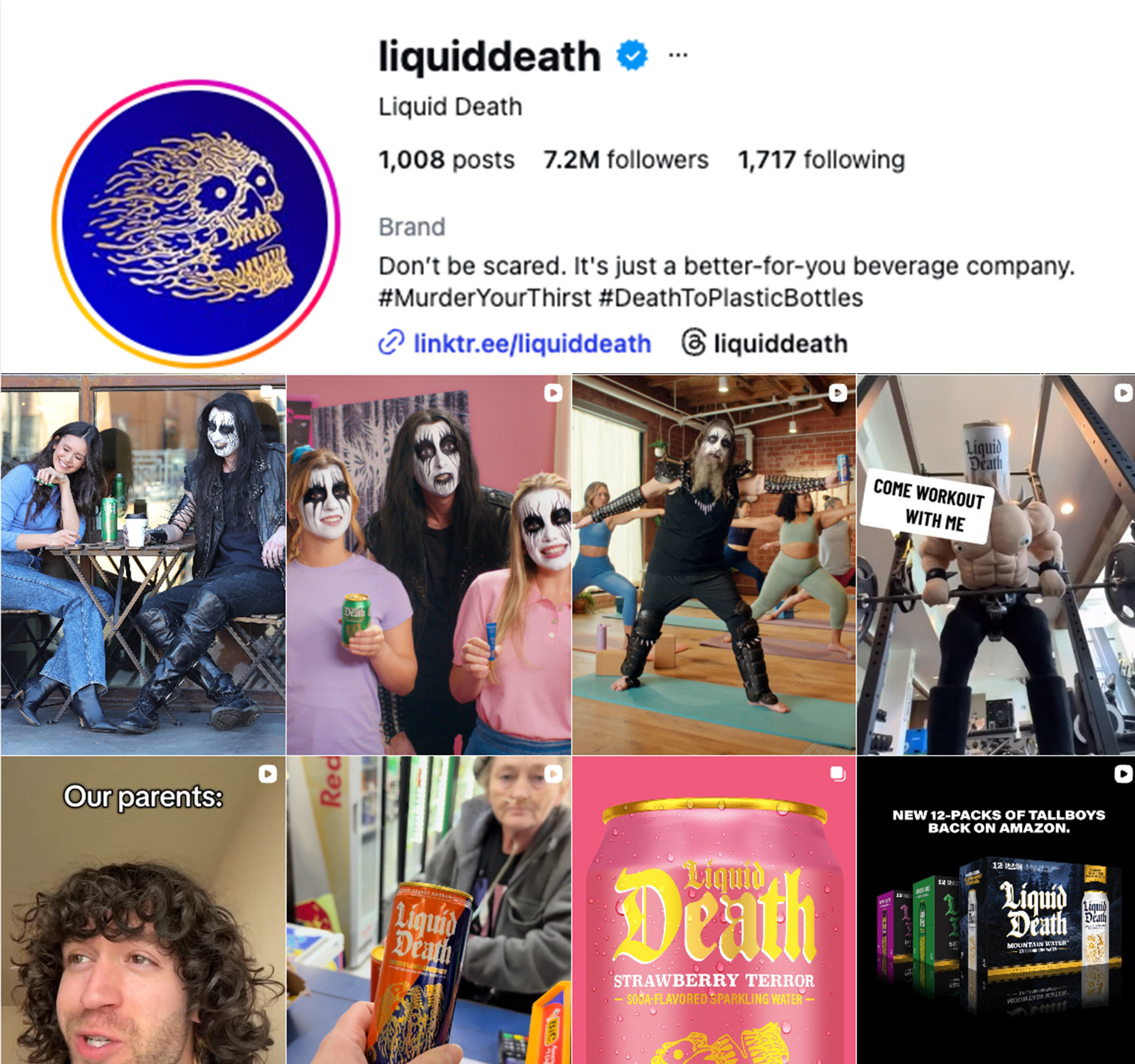
Liquid Death: Turning Water Into a Narrative Ecosystem
What should have been a commodity (water) became a cult brand by refusing to behave like one.
Liquid Death has flipped the script on hydration marketing by treating brand expression as a story engine. They don’t sell hydration. They sell identity, satire, irreverence, and cultural commentary, all anchored in entertainment mechanics.
How Liquid Death applies narrative architecture:
They think like an editorial or sketch comedy team, not a beverage brand. Their creative team operates like a writers’ room, producing social content designed to win the feed with unexpected humor rather than traditional ads.
Campaigns lean into absurdity like giving away a fighter jet or selling skateboards infused with Tony Hawk’s blood, not because it makes sense for a water brand, but because the narrative earns emotional engagement and shares.
They satirize advertising itself, flipping familiar tropes just enough to make audiences stop, laugh, and share.
Liquid Death’s social strategy isn’t random; it’s architected to generate shareability, identity alignment, and cultural conversation. That’s why even competitors’ Super Bowl reactions are part of the story, it becomes part of the narrative context, not just the media buy.
They’ve built more than followers, they’ve built a fan community that connects with the brand voice first, then the product second.

Crocs: From Comfortable Footwear to Serialized Micro-Drama Storytelling
Crocs is a useful brand example because like most “mundane” categories it started without obvious narrative depth.
That’s changing.
In 2026, Crocs announced a scripted micro-drama series, produced with Creative Artists Agency (CAA), that uses serialized storytelling to build emotional engagement around the brand.
The series, “Charmed to Meet You,” follows a young woman whose connection to her neighbor unfolds through Crocs Jibbitz charms, essentially turning product features into story beats.
Two important strategic moves here:
Narrative First: Rather than advertising product features, Crocs builds a story world where the product is woven into the emotional arc of the characters.
Cultural Context: Crocs’ overall brand refresh “Wonderfully Unordinary” is explicitly about identity and experience, not utility. This shift mirrors what entertainment properties do: build worlds people want to inhabit.
These micro-dramas aren’t just videos, they’re narrative hooks designed to deepen emotional investment over time.
The Five Pillars of The Entertainment Attention Framework
Now that we’ve seen brandtelling in action, here’s the structured framework brands can use to apply entertainment principles consistently:
1. Narrative Tension: Story Before Feature
Entertainment always begins with stakes, a conflict, a protagonist, an emotional question. In today’s reduced attention environments, tension buys seconds and seconds unlock memory.
This means:
Don’t open with what you are.
Open with why it matters.
2. Audience as Character: Identity Alignment
Great narratives position the audience as more than observers, they become participants. This is why Liquid Death’s audience feels like a tribe instead of a market segment, and why Crocs’ micro-drama invites viewers to see themselves in the story.
3. Episodic Architecture
Streaming has changed how we expect content to unfold: in seasons, arcs, episodes, reveals, and cliffhangers. Brands can adopt a similar rhythm to move audiences through anticipation curves, not just content dumps.
4. Anticipation Engineering
Great entertainment never reveals everything at once. It teases. It primes. It launches with a runway, not a single date. A micro-drama series is a perfect example.
5. Cultural Framing
Ultimately, the brands that win aren’t just noticed, they participate in culture. They anchor narratives that people talk about, reference, share, and internalize long after the scroll.
The Takeaway
Social media didn’t invent short attention spans, but it amplified them. What entertainment always understood is that attention is not a linear resource, it’s emotional currency.
Products don’t buy attention. Stories do.
Brands that structure their marketing like narratives, not catalogs, earn investment, loyalty, and memory.
Whether you’re selling water or footwear or enterprise SaaS, the logic is the same:
Attention isn’t owned, it’s activated and activation comes through narrative architecture.
Want to know more? Drop me a line at jordana@unscripptedcreative.com ⚡️